


Dr. Marshall-Rodriguez opened her talk to hip and knee surgeons with a simple promise: "I appreciate the opportunity to share a different way of thinking about Medicare and joint replacement, to show you that another practice model does exist, explain why I chose it, and give you the information to decide whether it might work for you." She was just as clear about its limits: "This is not a model for everyone, but it is an option worth understanding."
Here is her talk in four parts: the problem, the alternative, the real purpose and the playbook.
1. The Same Operation Now Pays a Fraction of What It Did
Measured in today's dollars, the decline is steep. The Medicare surgeon fee for a primary total hip was $4,173 in 1995 and $1,261 in 2025. Under the final 2027 fee schedule it falls to $964. A surgeon doing the same operation today keeps less than a quarter of what it paid thirty years ago.
| Starting point | Surgeon fee then (today's dollars) | 2027 final | Decline |
|---|---|---|---|
| 2000 | About $2,700 | $964 | About 64% |
| 1995 | $4,173 | $964 | About 77% |
| 1992 (fee schedule begins) | About $4,300 | $964 | About 78% |
| Mid-1980s (before the fee schedule) | About $10,000 | $964 | Over 90% |
As she cautioned, the oldest figures come from different payment measures and regions, so they show the direction of travel rather than a precise national comparison.
2. 2026 and 2027: The Deepest Cuts Yet
2026 already cut the surgeon fee for total hip and knee by 7.5%. The final 2027 rule, released days before her talk, goes much further. Work RVUs for total hip and total knee fall 12.6%, from 19.11 to 16.70, and the conversion factor falls 1.8% to $32.95 for qualifying APM participants. With the practice expense changes, the total professional fee drops about 17.5%.
| Medicare professional fee | 2026 | 2027 final | Change |
|---|---|---|---|
| 27130 (Total Hip), qualifying APM | $1,167 | $964 | −17.4% |
| 27447 (Total Knee), qualifying APM | $1,165 | $962 | −17.5% |
| 27130 (Total Hip), all other surgeons | $1,161 | $955 | −17.8% |
| 27447 (Total Knee), all other surgeons | $1,159 | $953 | −17.8% |
For the full breakdown of the final rule, see 2027 Medicare Cuts for Surgeons.
3. How Medicare Got Here
Hips and knees were singled out before the fee schedule even existed.
- Before 1986: Medicare paid customary, prevailing and reasonable charges, up to the 90th percentile of what surgeons charged. The surgeon set the price.
- 1987: OBRA 1987 named 12 "overpriced" procedures, with total hip and total knee on the list. Prevailing charges were cut, with no inflation update.
- 1989: OBRA 1989 created the resource-based relative value scale. Fees were now set by a government formula, not the market.
- 1992: The Medicare Physician Fee Schedule began with a conversion factor of about $31.00. In 2026 it is $33.40, a 34-year raise of about 8%.
- 1998 to 2015: The Sustainable Growth Rate formula scheduled cuts every year, patched every year, and practice costs kept climbing.
- 2027: CMS revalues hips and knees again, and the surgeon fee falls about 17.5%.
In her words: "Hips and knees were targeted by name in 1987 as two of the 12 'overpriced' procedures. Everything since has been the same policy applied with more precision and deeper cuts."
4. Costs Up, Surgeon Fees Down
The cost of delivering joint replacement has risen while the surgeon's payment has fallen. Indexed to 1992 for a primary total knee, she showed this squeeze:
| Since 1992 (primary total knee) | Change |
|---|---|
| Implant list price | About 4.8 times higher |
| Consumer prices | About 2.3 times higher |
| Practice costs | About 2.0 times higher |
| Surgeon fee, as paid | About 0.7 times (lower) |
| Surgeon fee, in today's dollars | About 0.3 times (lower) |
Peer-reviewed studies tell the same story. From 2000 to 2024, inflation-adjusted Medicare payments fell 56.9% for total knee and 54.3% for total hip arthroplasty, and orthopaedics saw the largest absolute decline in work RVU payment of four surgical specialties studied. Payment also varies by region: a study of primary total knee replacement found the Midwest had the steepest drop in average surgeon reimbursement from 2013 to 2021 (26.3%) and the lowest 2021 average, $988.70.
The forecasts are worse. A 2024 study in Arthroplasty Today projected that by 2030 total joint surgeons could earn $13.93 per hour for a primary total hip and $14.97 per hour for a primary total knee, at or below about $100 per Medicare case in 2023 dollars. These are projections, not observed values, but this year's cuts move in that direction.
"Sometimes a series of small reductions becomes our new normal, until we finally step back and look at the cumulative effect."
5. Many Surgeons Have Already Reached Their Line
At AAHKS 2025, attendees were asked what Medicare payment for a total joint would make it no longer feasible to operate on a Medicare patient. 76% answered $1,000, and another 13% answered $900. The final 2027 fee of $955 to $964 is now below the line most of those surgeons drew.
6. The Paths Open to an Arthroplasty Surgeon
Surgeons facing these numbers have choices:
- Hospital employment
- Academic or university employment
- Private practice supported by ancillaries
- Bundled payment arrangements
- Supplemental income from ASCs or consulting
- Opting out of Medicare, which she called "taking the plunge"
7. Opt-Out Is Rare, but Growing
Nationally, very few physicians opt out. As of November 2024, 12,244 non-pediatric physicians had formally opted out of Medicare, 1.2% of active physicians. The rate is highest in psychiatry (8.1%), plastic and reconstructive surgery (4.5%) and neurology (3.2%). Orthopaedic surgeons made up 2.6% of all opt-outs, and about 1.1% of orthopaedic surgeons had opted out.
In orthopaedics, the trend is climbing. New orthopaedic opt-outs rose from 0.3 per year in 2002 to 2004 to 32 per year in 2022 to 2024, and about 70% of opted-out orthopaedic surgeons practice in higher-cost regions.
Among arthroplasty surgeons, it is the established who go first. A 2025 Journal of Arthroplasty study found 308 orthopaedic surgeons in the CMS opt-out file, 85 of whom performed hip or knee arthroplasty:
- 37% in the New York City area and 27% in the Southwest, all in urban settings
- An average of 21.3 years in practice
- 52% fellowship trained
- 25% owned an ambulatory surgery center
The authors' conclusion: opt-out remains rare but is emerging among established, high-volume arthroplasty surgeons.
8. Her Own Path to Opting Out
Dr. Marshall-Rodriguez spent eight years in academics, doing research, teaching and caring for all comers. Although she was one of her department's highest producers, she was counseled to spend about seven minutes per patient. "It was then that I realized my patient care goals were not aligned."
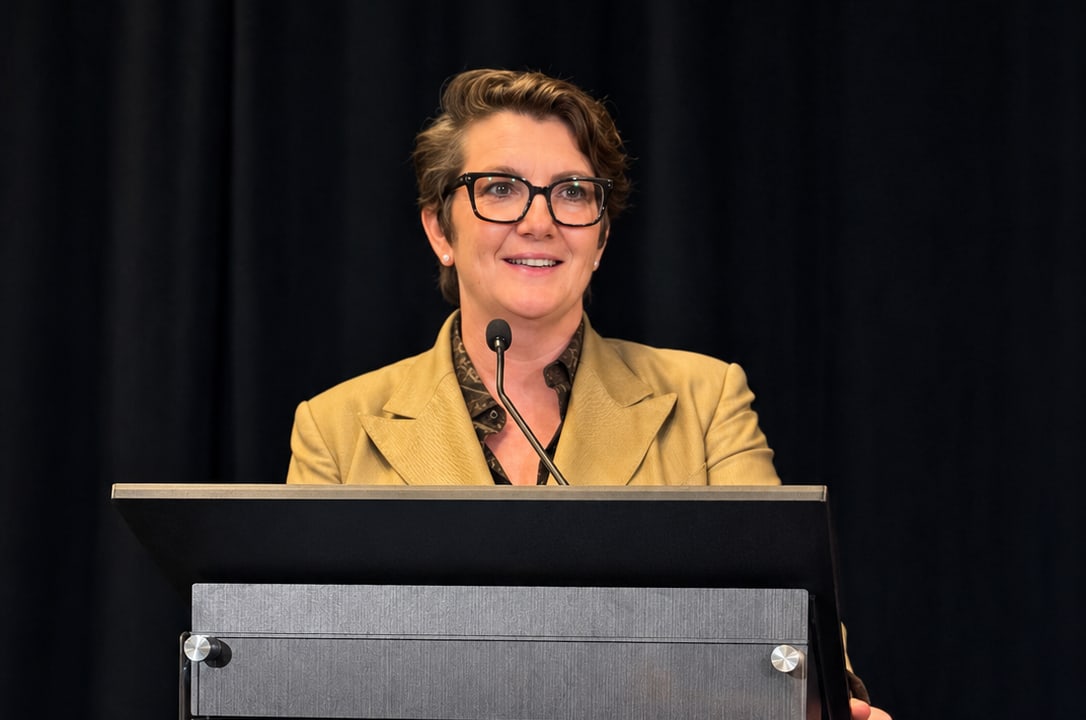
She moved into private practice, where her senior partner had been an opt-out surgeon for several years and encouraged her to take the same route. "I was initially very anxious about the decision and hesitant, for sure, but ultimately opted out." She started with a low fee, raised it as she came to see her value to patients, and later founded her own practice. Over roughly twelve years with Medicare opt-out, her model has grown into an insurance and concierge hybrid that fits how she wants to care for patients.
9. The Business Case: Work Smarter, Not Harder
Start with a simple thought experiment. One hundred cases at about $1,160 each bring in about $116,000 in surgeon professional revenue. When the Medicare fee falls, it takes more cases to reach the same number. In a private-pay model, the number of cases depends on the fee you set.
| Fee per total joint | Cases needed for about $116,000 |
|---|---|
| Medicare 2026 (about $1,160) | 100 |
| Medicare 2027 final ($955) | 122 |
| Private fee of $2,000 | 58 |
| Private fee of $3,500 | 34 |
| Private fee of $5,000 | 24 |
| Private fee of $6,500 | 18 |
An illustration only: surgeon professional revenue, not profit, assuming every case is paid in full with no change in expenses or case mix; case counts rounded up. As she put it, the choice is "more cases for the same revenue, or fewer cases as the surgeon fee increases."
10. The Patient Is the Why
For her, the real purpose is not charging a different fee. It is changing how you can care for patients.
- Time: to listen and decide together
- Autonomy: to build care around the patient
- Continuity: to be present through recovery
- Relationship: to restore one-on-one trust
"The patient is why. The financial model makes it possible."
Patients say the same thing. In a study of 5,163 new orthopaedic patients, perfect satisfaction scores came most often for physician courtesy (80.4%) and clear explanations (80.3%), and least often for access: convenience of office hours (60.4%), getting the appointment they wanted (59.5%), wait time (54.6%) and information about delays (53.8%). "It's the patient interaction that they value."
Practice medicine on your terms. She listed what opting out can take off a surgeon's plate: Medicare regulatory burden, EHR mandates, MIPS and MVP reporting, and audit risk. "It does not remove every regulation or clinical obligation, but it can give us more control over our day." Fewer patients means more time per patient, a more personal clinical experience and, in her view, more satisfied patients.

11. Weigh the Risks and the Rewards
She drew on the American Association of Hip and Knee Surgeons' July 2026 white paper and August 2026 member brief:
| Rewards | Risks |
|---|---|
| Set your own fees; the market sets the price, not regulation | Medicare volume and referrals may drop |
| More control over practice revenue | A two-year commitment after a 90-day window |
| No precertification or peer-to-peer appeals | Opt-out also covers Medicare Advantage plans |
| Fewer staff and lower overhead | It follows you to every practice site |
| Payment collected up front, with no collections afterward | Erroneous Medicare claims risk an audit |
The AAHKS member brief warned that the proposed cuts "will exponentially accelerate" surgeon opt-outs. "I would never suggest making this decision without examining both sides."
12. Fit First, Compliance Always
The first question is not how much to charge. It is whether your practice is structured to make opt-out viable: your employment model, patient mix, referral patterns and local market. If the answer is maybe, pause and re-evaluate. If the answer is yes, address the legal requirements, set a fee that reflects your market and services, and implement carefully with your staff and patients. The free Practice Fit Assessment is a good place to start.
Filing and compliance, as she outlined them:
- File the opt-out affidavit with your Medicare Administrative Contractor (MAC)
- The term is two years and renews automatically each two-year period
- A first-time opt-out can be ended within 90 days of its effective date
- To leave later, cancel at least 30 days before the two-year term renews
- Put compliant private-pay contracts in place with every Medicare patient
- Give clear notice to patients and referring providers
- An individual surgeon may opt out within a larger group; check group Medicare Advantage contracts first
This is where expert guidance matters. Plan the move with a healthcare attorney before you file. For plain answers to the most common worries, see The 5 Fears Stopping Surgeons From Opting Out of Medicare.
13. Let Your Fee Grow With Your Practice
"I didn't begin with the fee I charge today." Over twelve years she adjusted her pricing to reflect her market, patient demand and the value of her time. "Every surgeon's path will be different. The important point is that opting out gives you the ability to make those decisions yourself."
14. Train Your Team to Explain the Fee
Patients need a simple, written explanation of what they pay privately and what is still billed to their insurance.
| Covered by Medicare or insurance (as usual) | Paid directly to the surgeon (private contract) |
|---|---|
| Hospital or facility and operating room | The professional surgical fee |
| Anesthesia | Surgeon availability and coordination before and after surgery |
| Implants and supplies | Concierge access, such as after-hours direct access to the surgeon's team |
| Imaging, labs, therapy and equipment | A written quote up front, with no surprises |
- Say: "Medicare or your insurance covers the hospital, anesthesia, implants and therapy."
- Say: "Only the surgeon's professional fee is private, and we quote it up front."
- Avoid: "We don't take Medicare." It is inaccurate and confusing for patients.
15. Give Patients More of What Matters: Your Time
Position the practice around direct access, transparent pricing and an elevated clinical experience, backed by a clear website FAQ, consent and contract packets, and plenty of patient education. Then deliver it in the room:
- More time: a longer first consultation, with unhurried questions and shared decisions
- Show, don't just tell: review the arthritis anatomy, hip and knee models and actual implants together
- Educate and prepare: walk through imaging, written materials, options, recovery and expectations
- Personal connection: sit beside the patient, listen and give individualized care

"They are paying for my professional care, and I want them to feel the difference in the quality of our time together."
Three Take-Homes
- Reimbursement pressure is real.
- Opting out is a viable alternative.
- Reclaim time, autonomy and the physician-patient relationship.
The business model is the means. The patient is the why.
After twelve years of practicing this way, what she values most is not simply setting her own fee: "It's the ability to decide how I spend my time, how I care for my patients, and what kind of practice I want to build." And she ended where she began: "This model won't be right for everyone, but for those whose practices are suited to it, I think it's an option worth understanding."
Where to Start
- OptOutMD Practice Fit Assessment: explore whether Medicare opt-out suits your practice
- AAHKS: Medicare Opt-Out for the Total Joint Surgeon: an overview with guidelines and FAQs
- AMA: Medicare Participation Options Toolkit: compare participating, non-participating and private contracting
- CMS: Medicare Benefit Policy Manual, Chapter 15: the official opt-out and private contract rules
OptOutMD is by doctors, for doctors. Dr. Marshall-Rodriguez has teamed up with OptOutMD to help fellow surgeons work through the opt-out roadmap safely.
Disclosures, as stated in her presentation: Dr. Marshall-Rodriguez holds private stock in TruCells and is an unpaid consultant to OptOutMD.