

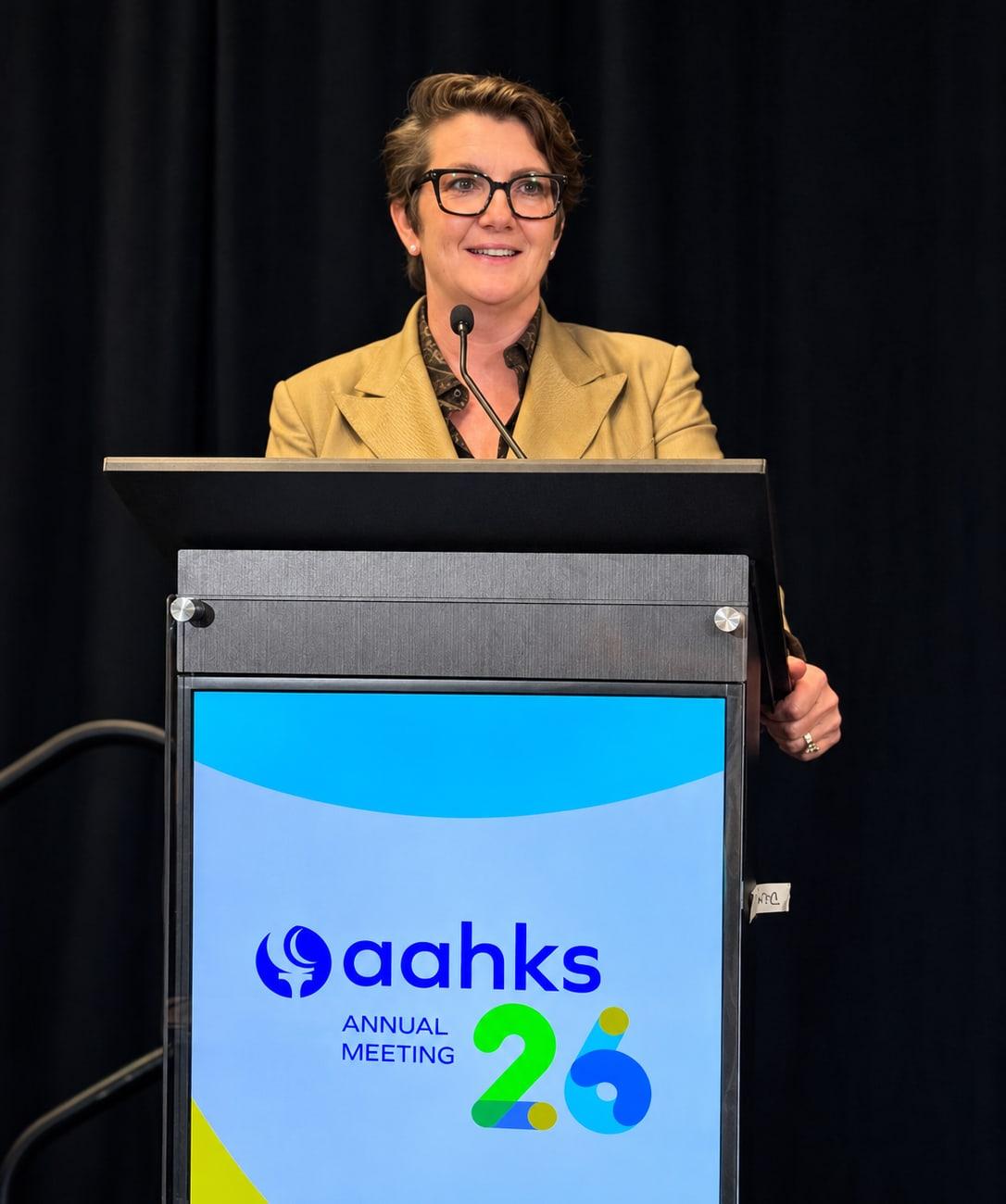
At AAHKS 2026, OptOutMD's Matt Lowman heard the same sentence from surgeon after surgeon: "I know I need to opt out. I'm just scared." That fear is reasonable. But start with why surgeons are looking at all: they want to practice medicine the way they trained to, with time for each patient and decisions made between the surgeon and the patient.
The 2027 Numbers for Hip and Knee Surgeons
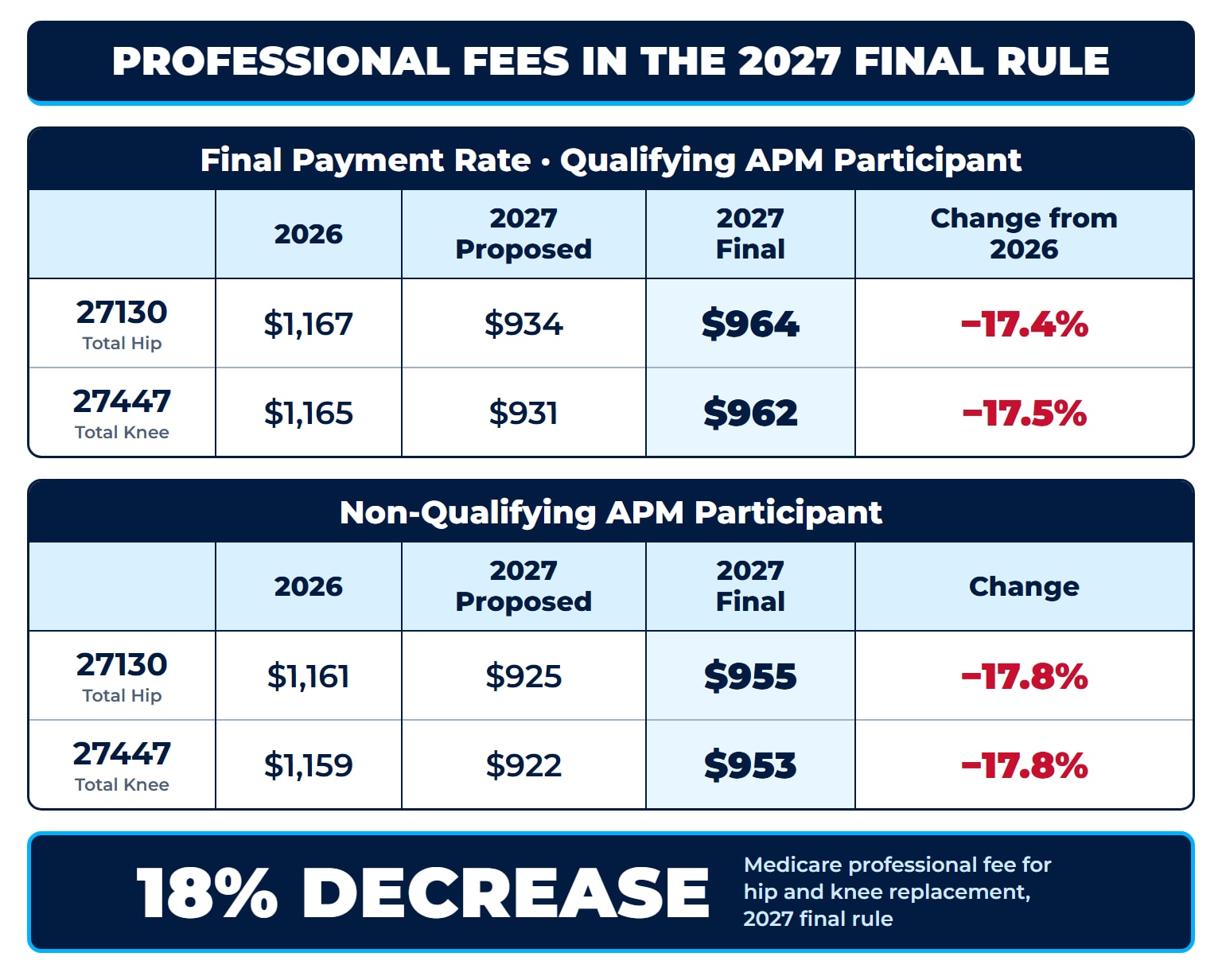
For surgeons who are not qualifying APM participants, the drop is 17.8%. Figures as presented at the AAHKS 2026 Annual Meeting.
What Surgeons Gain When They Opt Out
- You set your own fees. Your price reflects the value of your care, not a government fee schedule that falls every year.
- You are paid before surgery. Opted-out joint surgeons can collect payment up front for elective procedures, with no collections process after the fact.
- Far less paperwork. Much of the precertification, peer-to-peer appeals and documentation burden goes away when you and your patient contract directly.
- A leaner practice. Fewer billing tasks mean a smaller back office and lower overhead.
- Time with your patients. When each case is paid fairly, you do not have to run on volume, and that time goes back to the people you treat.
What It Can Mean for Your Patients
- More time together. A practice that is not built on volume has room for longer visits and real conversations about what a patient wants from surgery.
- A clear price, agreed in advance. Patients know what their surgeon's care will cost in writing, before surgery.
- Fewer delays. With much of the precertification and peer-to-peer process gone, decisions about care stay between the surgeon and the patient.
- A relationship, not a transaction. Patients choose their surgeon, and the surgeon answers to the patient.
Practice independence, patient first. Those are the reasons surgeons look. Here are the five fears that stop them, and what the rules actually say.
Fear 1: "My Medicare Patients Will Leave Me"
Many patients choose the surgeon, not the payer. They value the time and attention a smaller, unhurried practice can give. Some will leave, and that belongs in your plan. Once you opt out, Medicare does not pay for your services. Patients on fixed incomes may choose a surgeon who still takes Medicare, but oftentimes, once they are told the actual surgical fee, they remain with the surgeon. In Dr. Marshall-Rodriguez's experience, most patients assume surgeons are paid between $5,000 and $10,000 per case. Once they learn your fee, which you set yourself and is usually between $2,000 and $6,500, they are surprised at how low it is and are very willing to pay the surgeon directly.
They can still see you. Patients can still see you under a written private contract and pay you directly. Hospital charges and tests you order can still be billed to Medicare by the hospital, so your price can cover your services only.
Look at who has done it. A 2025 Journal of Arthroplasty study of arthroplasty surgeons who opted out found they had been in practice an average of 21.3 years, and 53% still accepted insurance plans other than Medicare. These are established surgeons that patients seek out by name, and most did not go all-cash.

Fear 2: "One Mistake and I'm in Legal Trouble"
The rules are strict, but extremely straightforward. Opting out comes down to two documents done exactly right:
- An opt-out affidavit, filed with your Medicare Administrative Contractor (and every contractor you would otherwise bill), stating you will see Medicare patients only under private contracts and will not submit Medicare claims.
- A written private contract with every Medicare patient, signed before you provide any service, in which the patient agrees to pay you directly and not to bill Medicare. The patient gets a copy.
Where surgeons get hurt is doing it halfway. If a required step is missed, private contracts can be void and you remain bound by Medicare billing rules. That is exactly why opt-out should be planned with a healthcare attorney before you file, not fixed afterward.
You don't need courage to opt out of Medicare. You need a plan.
Fear 3: "I'll Be Locked In Forever"
The term is two years, and there is a way back. An opt-out runs for two years and renews automatically. To return to Medicare at the end of a term, you send written notice to your contractor at least 30 days before the period ends.
First-timers get an early exit. If it is your first opt-out, you can end it within 90 days of its effective date, by refunding anything you collected above Medicare's limiting charge and notifying the patients you contracted with. After that window, you are out for the full two years, so the decision deserves real planning.
Fear 4: "What If a Medicare Patient Has an Emergency?"
Emergencies are the exception. You can treat a Medicare patient in an emergency or urgent situation without a private contract. In that case the claim goes to Medicare and you may collect no more than the limiting charge. You may never ask a patient to sign a private contract while they are facing emergency or urgent care.
Fear 5: "My Contracts and Referrals Won't Survive It"
Check your Medicare Advantage contracts first. Opt-out covers traditional Medicare and Medicare Advantage. Many practices hold group contracts with Medicare Advantage plans. The individual surgeon must be carved out of that Medicare Advantage plan. This is usually a detail that can be overcome.
Referral patterns may shift. Some physicians may shift their referral patterns away from you. However, in our experience, a simple conversation with those referring physicians to explain the payment model is enough to maintain those referrals. In addition, many of our patients come from concierge primary care doctors. Those concierge PCPs recognize the importance and added benefit of a concierge model for orthopaedics, and in our experience many orthopaedic practices have actually seen an increase in concierge referrals once they transition to a concierge model.
You can still order tests and labs and refer as normal. Opted-out physicians can order tests and labs, refer and prescribe for Medicare patients; your Medicare enrollment record just needs to show your opt-out status.
Lower volume does not translate to lower income. Because you set your own fees, each case can pay you more than Medicare would. That means you may not need to see as many patients to sustain your practice, so you can spend more time with each patient and less time worrying about volume.
The Fears, Side by Side
| The fear | What is true | What to do |
|---|---|---|
| Patients will leave | Some may; many choose the surgeon | The increase in your fee offsets the possible lower volume |
| Legal mistakes | The rules are strict but specific | Pre-templated contracts need only a final legal review |
| Locked in | Two-year term, a way back, 90-day first-time exit | Plan the timing before you file |
| Emergencies | Covered by an exception | Train your team on the emergency rules |
| Contracts and referrals | The surgeon can be carved out of a group Medicare Advantage plan; a simple conversation keeps referrals | Plan the carve-out and talk with your referring physicians |
Why the Conversation Is Happening Now
Payment keeps falling. In the final 2027 Medicare fee schedule, the work RVUs for total hip and total knee arthroplasty fall 12.6%, from 19.11 to 16.70, and the conversion factor falls 1.8% for qualifying APM participants. With the practice expense changes, the total professional fee for a hip or knee replacement goes down 17.5%, and 17.8% for surgeons outside a qualifying APM. In July 2026, the American Association of Hip and Knee Surgeons published a white paper on Medicare opt-out for total joint surgeons. And at AAHKS 2026, orthopaedic surgeon Dr. Amanda Marshall-Rodriguez urged the society to recognize Medicare opt-out as an alternative payment model and to help surgeons navigate it. What used to be a hallway conversation is now on the main stage.
Practice Independence. Patient First.
OptOutMD is by doctors, for doctors. Dr. Marshall-Rodriguez has teamed up with OptOutMD to help fellow surgeons work through the opt-out roadmap safely, so they can spend their careers caring for patients instead of chasing volume.